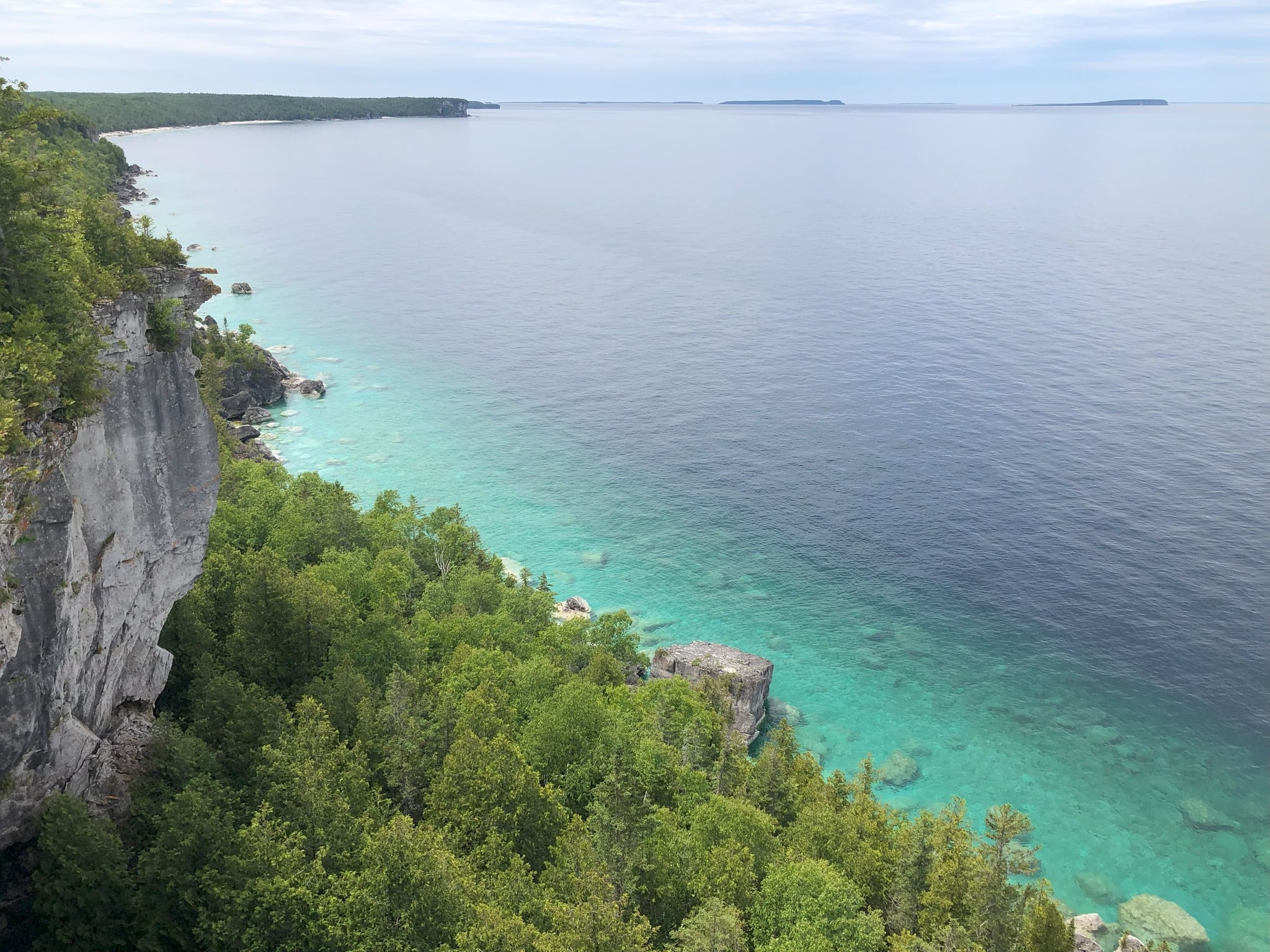
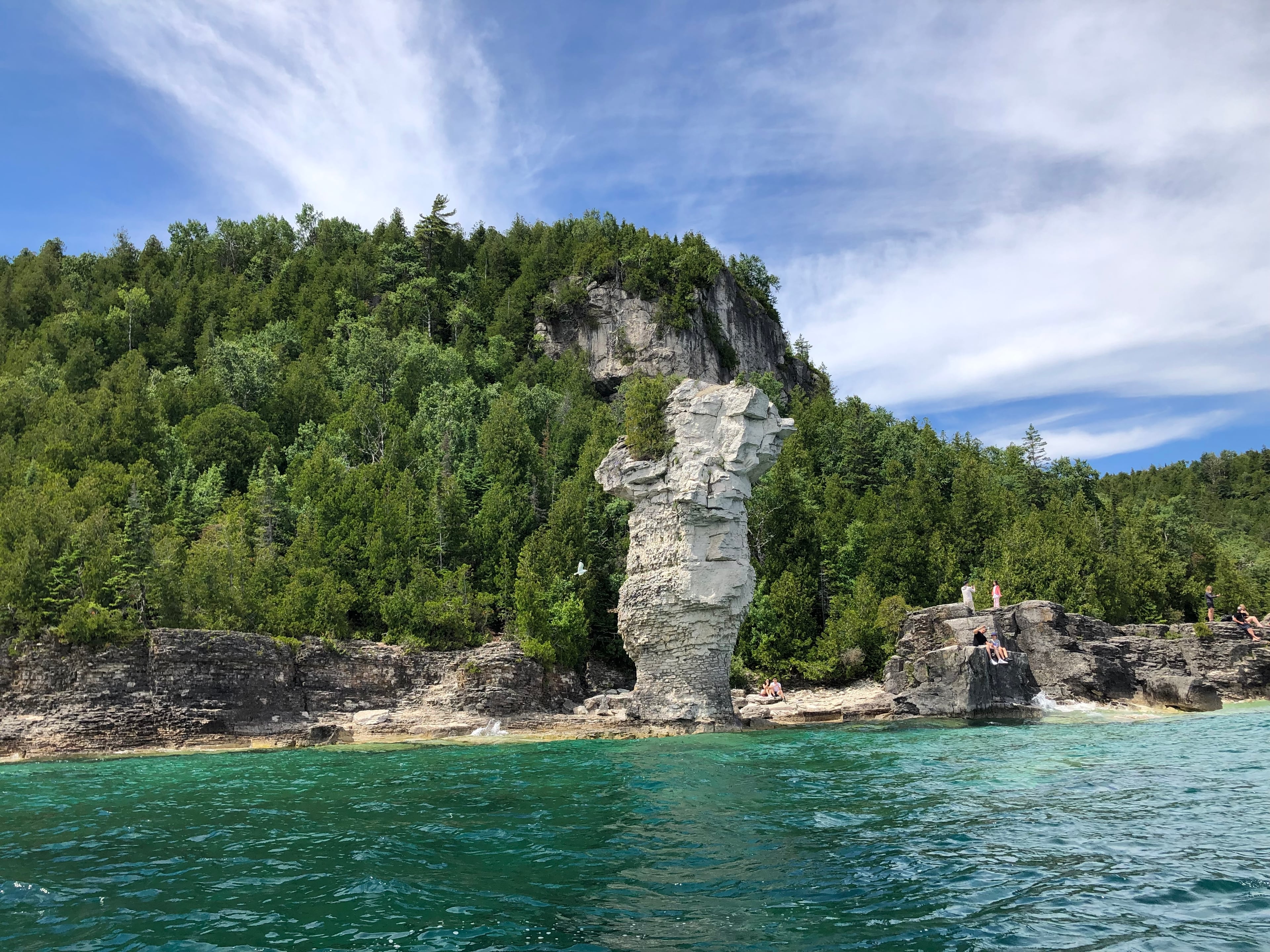
Saugeen Ojibway Nation, often called SON, is made up of two distinct First Nations: Chippewas of Nawash Unceded First Nation and Chippewas of Saugeen First Nation. SON’s traditional territory covers more than two million acres of land and water.
It stretches:
- North to the top of the Saugeen Peninsula
- East to the Nottawasaga River
- South to the town of Arthur
- West to Goderich
- Across significant portions of Lake Huron and Georgian Bay
The territory includes the lands, shorelines, waters and lakebeds that have sustained the Saugeen Anishnaabek for generations.
Today, many people know this area for its beaches, cottages, farms, communities and natural beauty. For SON, it is more than a destination - it is a homeland.
Treaty History
When settlers arrived, the Saugeen Anishnaabek entered into treaties with the Crown. These agreements made it possible for newcomers to live on and benefit from parts of our territory.
In return, the Crown made promises.
Those promises included responsibilities related to our lands, the proceeds from land sales and the protection of the lands reserved for our communities. Despite written commitments, continued settlement and government action resulted in SON losing access to much of its territory.
Important moments in this history include:
1763: The Royal Proclamation
The Royal Proclamation recognized that First Nations lands could not simply be taken or settled without agreement.
1836: Saugeen Treaty No. 45 ½
Negotiated with the Crown. In the Treaty, SON agreed to open up 1.5 million acres of land for settlement in exchange for economic assistance and protection from settler encroachment on the Saugeen Peninsula. The Crown promise to “forever “to “protect [the Peninsula] for [SON] from the encroachments of the whites.” The Court found that this promise to protect the Peninsula was the main benefit that SON received for agreeing to share their lands south of the Peninsula with newcomers.
1836-1854: Intensifying squatting and timber theft on the Peninsula
In spite of this promise, there was substantial squatting and timber theft on the Saugeen Peninsula. Although Crown officials were well aware of the problem, they did little to stop it. As the early 1850s arrived, squatting worsened significantly.
1854: Saugeen Peninsula Treaty No. 72
In August 1854, Indian Superintendent T.G. Anderson came to seek a surrender of the Peninsula. He said: “You complain that the whites not only cut and take your timber from your lands, but that they are commencing to settle upon it, and you cannot prevent them, and I certainly do not think the Government will take the trouble to help you while you remain thus opposed to your own interest. The Government, as your guardian, have the power to act as it please with your reserve, and I will recommend that the whole, excepting the parts marked on the map in red and blue, be surveyed for the good of yourselves and children.” In spite of this, SON resisted sharing more of their lands. In October 1854, Superintendent General of Indian Affairs Laurence Oliphant came back again to seek more lands from SON. He described his plan for the meeting: to “wring from [SON], some assent, however reluctant” to a surrender of the Peninsula. He told SON that, in spite of the Crown’s Treaty promise, there was nothing the Crown could do to protect the Peninsula. It was impossible to prevent squatting on their lands. After considerable pressure, in October 1854, Treaty 72 was signed. The very next day, having secured Treaty 72, Oliphant did what he told SON was impossible: he sent a notice to the local sheriff directing him remove squatters from the Peninsula. Under Treaty No. 72, most of the Saugeen Peninsula was opened to settlement. The Crown promised to protect the remaining lands and hold the proceeds from land sales for the benefit of the Saugeen Anishnaabek. Further land treaties followed. Over time, SON’s land base was reduced from approximately two million acres to a small portion of the territory our ancestors had occupied and cared for.
1994: SON files the Treaty Claim
SON files a claim that argues the Crown breached its treaty promise to protect the Saugeen Peninsula for SON “from the encroachment of the whites” and breached the honour of the Crown by failing to diligently implement its treaty promises and by engaging in sharp dealing to pressure SON for more land.
2019-2020: SON's Treaty Claim in Court
The Ontario Superior Court hears SON’s Treaty Claim.
2021: Decision from the Court that Crown breached Treaty 45 ½ and the Honour of the Crown
After hearing all the evidence, the Court concluded that the Crown breached the honour of the Crown by failing to diligently implement its promise in Treaty 45½ to protect the Saugeen Peninsula The Court also said that the Crown breached the honour of the Crown leading up to the signing of Treaty 72 when T.G. Anderson told SON the Crown would not honour its treaty promise and threatened to take the Peninsula without SON’s consent. Remedies were left for Phase 2. (Chippewas of Saugeen First Nation et al. v. Canada et al., 2021 ONSC 4181.)
Treaties still matter. Promises still matter.
SON today
SON continues to protect its rights, uphold its responsibilities and strengthen its role in decisions affecting Saukiing Anishnaabekiing.
That includes working with governments, municipalities, organizations and industries operating within the territory. SON expects these relationships to be respectful, transparent and grounded in the recognition that SON is not simply another stakeholder.
Decisions about our territory can have lasting environmental, cultural, social and economic effects. SON must be involved from the beginning—not informed after the important decisions have already been made.
Our territory. Our future. Our say.
Stand with Saugeen Ojibway Nation
Learn the history. Share the facts. Help call on governments to honour their promises and respect SON’s voice in decisions affecting its territory.
Promises matter. Consent is the bare minimum. It is time to act.